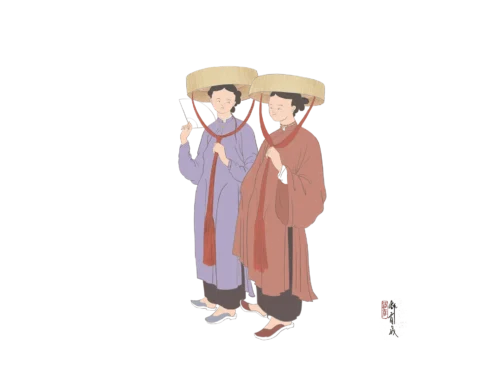
In Central Vietnam, particularly in Huế, wedding customs were more elaborate in ritual form yet restrained in display. Ceremonies were performed with strict order, but the material value of gifts was less emphasized. People in Huế believed in “trọng lễ nghi khinh tài vật” (valuing ritual propriety over wealth).
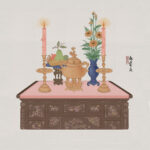
During the lễ ăn hỏi, the groom’s family presented betrothal gifts (sính lễ) such as betel and areca, tea, tobacco, bánh phu thê (husband-and-wife cakes), and a pair of nến tơ hồng (wedding candles). The engagement was often marked by a simple tea banquet, where families discussed the auspicious wedding date.
Notably, there was no custom of thách cưới (demanding dowry). Gifts varied depending on the families’ means but always retained symbolic items.
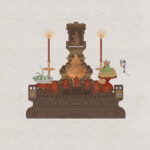
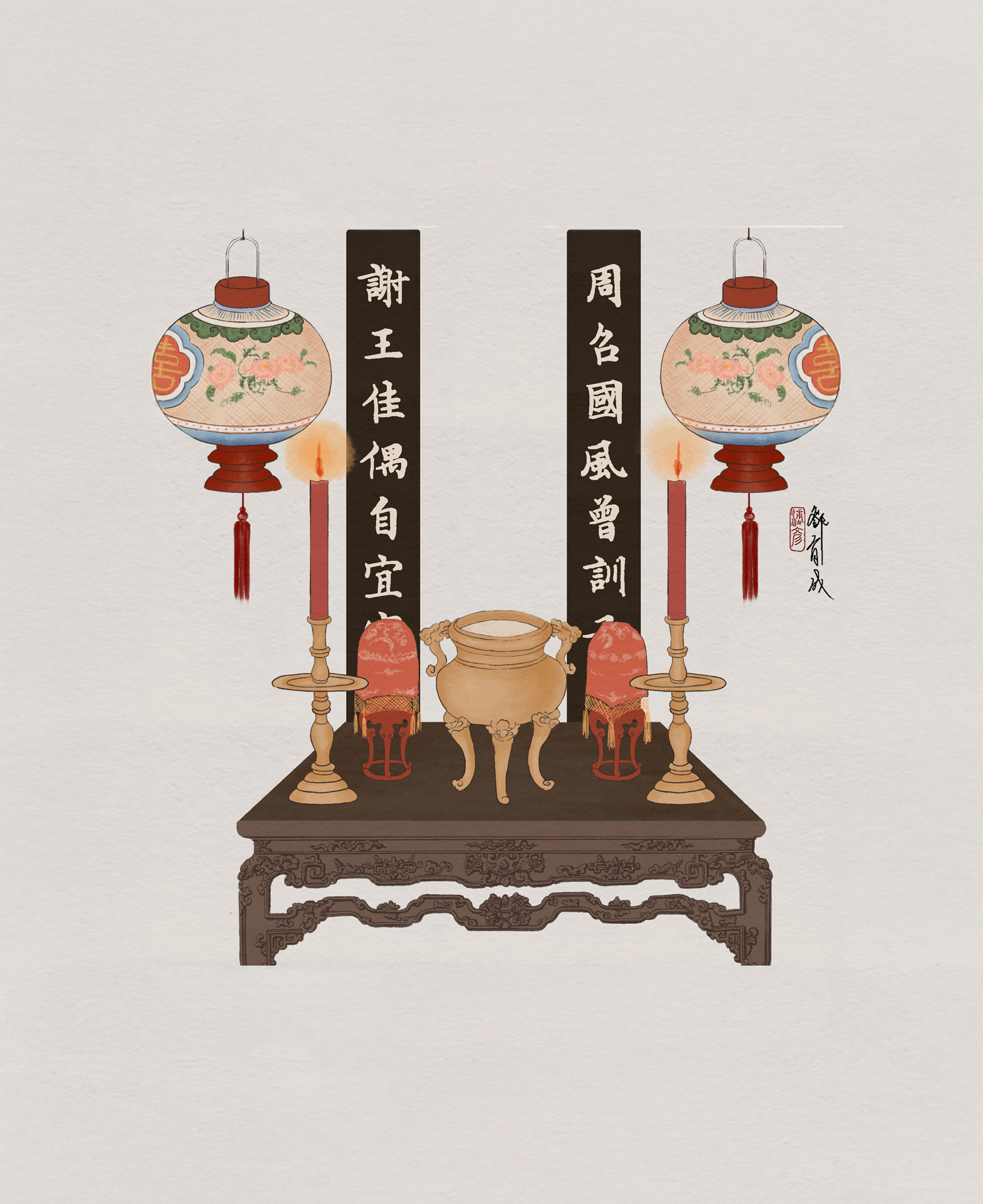
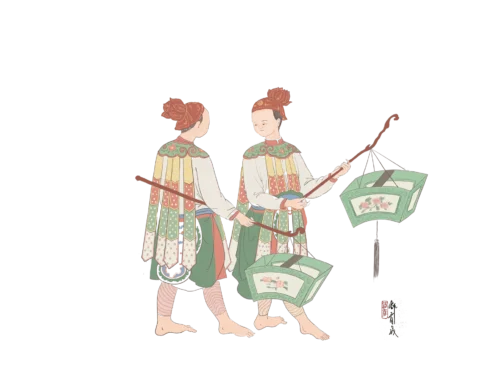
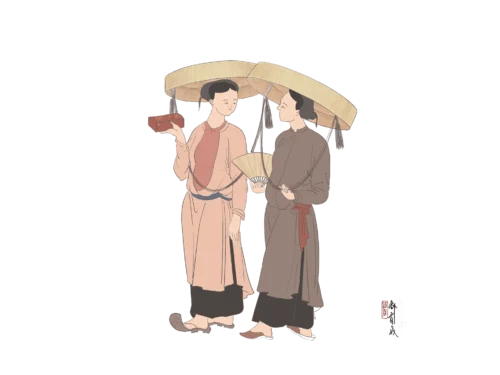
In the bridal procession, groomsmen carried offering trays, while two children carrying lanterns walked in front — a distinctive feature of Huế weddings. Before entering the bride’s home, a relative carried a tray of wine to request permission. If an ancestral altar was prepared, the groom’s side lit the pair of wedding candles.
At the wedding, formal introductions of all participants were made, reflecting the Huế emphasis on etiquette. The ceremonies included: xin giờ (requesting the hour), bái tơ hồng (silken thread ritual), rước dâu (procession at the bride’s house), đón dâu (receiving the bride), and trình báo gia tiên (reporting to ancestors) at the groom’s home.
On the wedding night, the couple performed giao bôi hợp cẩn: drinking from the same cup of wine. In the bridal chamber, a ritual tray with 12 betel leaves, salt, and ginger was prepared. The couple chewed all 12 betel leaves, and tasted the salty and spicy condiments — a symbolic reminder to endure life’s hardships and cherish their bond.
Three days later came the lễ lại mặt: the groom’s family visited the bride’s home to acknowledge her as their daughter-in-law. The ritual was modest, with families sharing tea and cakes.